

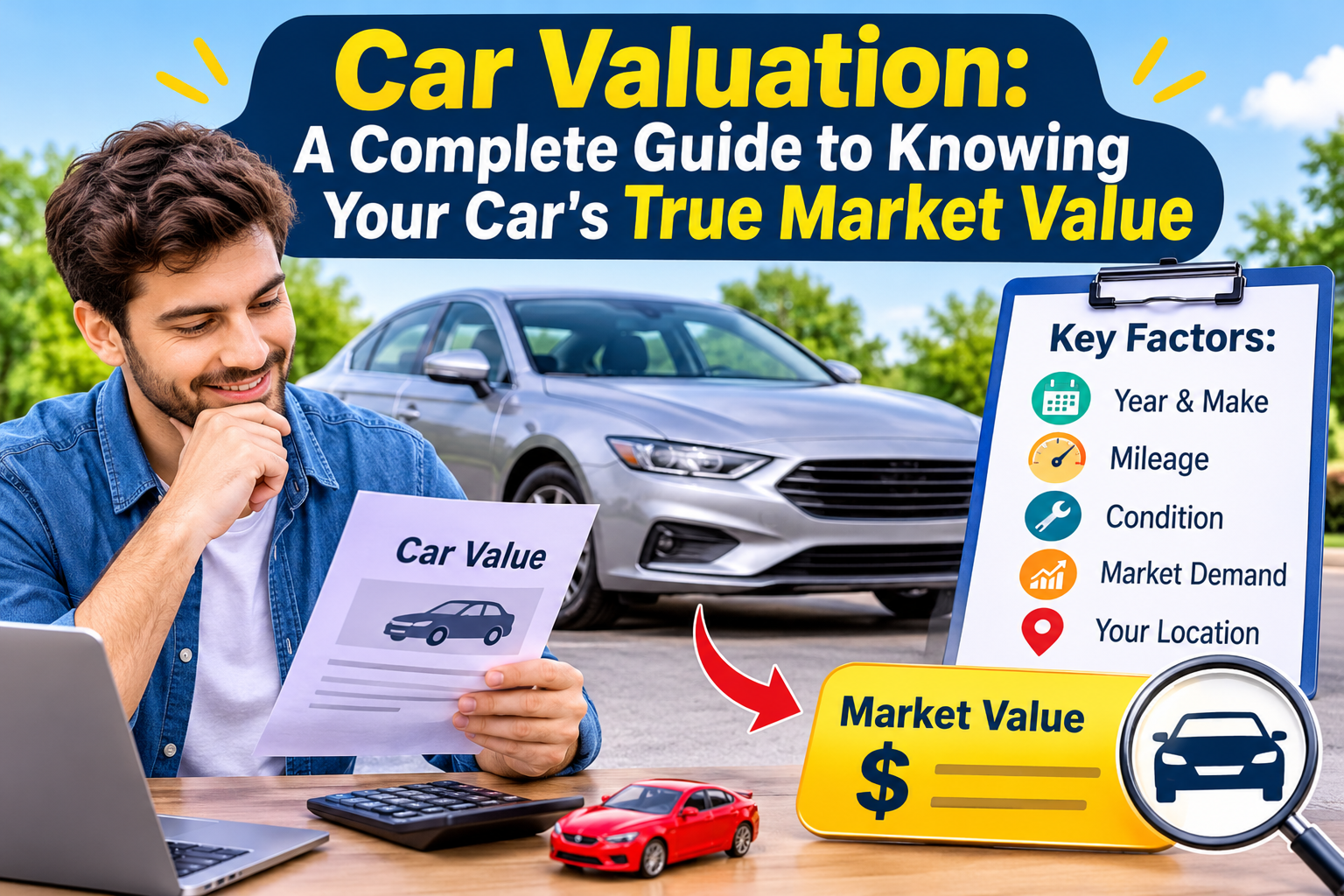
Selling or buying a car can be exciting. However, knowing its correct price can sometimes feel confusing. Every car has a different value. Its age, condition, mileage, and model can change its price. This is where car valuation becomes helpful. It helps you understand how much your vehicle may be worth in today’s market. Whether you want to sell your car, buy a used vehicle, or compare different models, knowing its value is important. It can also help you avoid paying too much or accepting a low offer. Many people set prices by looking at other advertisements. However, advertised prices do not always show the actual market value. A better approach is to compare similar vehicles and check their condition. In this guide, you will learn how vehicle prices are calculated, what affects resale value, and how to get a fair estimate.
1. What Is Car Valuation?
Car valuation means finding the estimated market price of a vehicle. It tells you how much your car may sell for under normal market conditions. The estimate depends on several important details. These include the car’s brand, model, manufacturing year, mileage, and overall condition. Market demand also plays an important role. For example, a popular family car may have more buyers. This can help it maintain a better resale price.
A vehicle valuation is useful for both buyers and sellers. Sellers can use it to choose a reasonable asking price. Buyers can use it to avoid paying more than necessary. It also helps people compare different vehicles before making a decision. Remember, an estimated value is not always the final selling price. The final amount depends on the buyer, seller, vehicle condition, and market situation.
2. Why Is Car Valuation Important?
Knowing your vehicle’s worth can make buying and selling easier. Without a proper estimate, you may make an expensive mistake. Some sellers ask for very high prices. Others accept low offers because they do not know their car’s actual worth. A reliable price estimate gives you a better starting point.
Here are some important reasons to check your vehicle’s market value:
- Better selling decisions: You can choose a fair asking price.
- Smart buying: You can compare a seller’s demand with similar vehicles.
- Easy negotiations: You have a reasonable price range to discuss.
- Financial planning: You can estimate how much money your vehicle may bring.
- Better comparisons: You can understand differences between similar models.
- Avoiding losses: You can reduce the risk of accepting an unfair offer.
For example, imagine you own a five-year-old sedan. Similar cars are selling for around the same price. This information gives you a useful starting point. You can then adjust your asking price based on your car’s condition and features.
3. What Factors Affect Your Car’s Market Value?
Several factors influence how much a vehicle is worth. Two cars from the same year may have different prices. This happens because their condition, mileage, and service history may differ.
The following factors can affect your vehicle’s estimated price:
- Brand reputation: Popular and trusted brands may attract more buyers.
- Model year: Newer vehicles usually have higher market values.
- Mileage: Cars with lower mileage may attract stronger offers.
- Physical condition: Scratches, dents, and damaged paint can reduce value.
- Engine condition: A healthy engine can improve buyer confidence.
- Transmission: Smooth transmission performance is important.
- Service history: Regular maintenance records can support a better price.
- Fuel type: Petrol, diesel, hybrid, and electric options have different demand.
- Market demand: Popular models may sell faster.
- Extra features: Safety systems and comfort features can increase interest.
No single factor decides the final price. Buyers usually consider several details before making an offer. Therefore, always evaluate the complete vehicle instead of focusing on its age alone.
4. How Does the Car Valuation Process Work?
The valuation process is usually simple. First, you collect basic information about your vehicle. This includes its make, model, year, variant, and mileage. Next, you compare it with similar vehicles available in your local market.
After that, you check the vehicle’s physical and mechanical condition. A car with a clean interior and healthy engine may receive a better estimate. However, major repairs or accident damage can reduce its value.
You should also consider current market demand. A popular model may attract more buyers than a less common vehicle. Online listings can help you understand asking prices. However, remember that asking prices are not always completed sale prices.
Finally, combine all these details to create a realistic price range. This approach makes your vehicle price estimate more useful. It also helps you negotiate with greater confidence.
5. Detailed Car Valuation Information Table
Before estimating a vehicle’s price, collect its important details. The following table shows the information you should review during the valuation process.
| Valuation Detail | Information Required | Effect on Value |
| Car Brand | Toyota, Honda, Suzuki, etc. | Brand demand matters |
| Car Model | Exact model name | Popular models may sell better |
| Manufacturing Year | Original production year | Older cars often lose value |
| Registration Year | Registration date | Helps identify vehicle history |
| Mileage | Total distance driven | Lower mileage may help |
| Engine Capacity | Engine size in CC | Affects buyer preferences |
| Transmission | Manual or automatic | Depends on market demand |
| Fuel Type | Petrol, diesel, hybrid, electric | Influences running costs |
| Exterior Condition | Paint, dents, scratches | Damage may reduce value |
| Interior Condition | Seats, dashboard, electronics | Better condition attracts buyers |
| Engine Condition | Performance and maintenance | Mechanical problems reduce value |
| Accident History | Previous accident details | Major damage can lower value |
| Service History | Maintenance records | Builds buyer confidence |
| Ownership History | Number of previous owners | Can influence buyer interest |
| Market Demand | Current buyer interest | Strong demand may increase value |
| Extra Features | Cameras, sensors, safety systems | Useful features may add value |
This information creates a clearer picture of your vehicle. It also helps you compare your car with similar models. Always provide correct details when using an online car valuation tool. Incorrect information can produce an unrealistic estimate.
6. How to Check Your Car’s Value Online
Online tools have made vehicle pricing much easier. You no longer need to visit several dealers just to get an initial estimate. Many automotive websites provide online car valuation services. These tools use vehicle details and market information to estimate prices.
Follow these simple steps:
- Open a trusted automotive valuation website.
- Enter your car’s brand and model.
- Select the correct manufacturing year.
- Add the vehicle’s variant and mileage.
- Choose the correct transmission and fuel type.
- Provide details about its condition.
- Review the estimated market price.
Some tools may ask for additional information. This can include accident history, registration details, or location.
An online estimate is a useful starting point. However, it cannot always identify hidden mechanical problems. You should also compare similar listings and arrange a physical inspection when necessary. Combining online research with a professional assessment can provide a more realistic result.
7. How Car Mileage Affects Resale Value
Mileage is one of the most important factors in vehicle pricing. It shows how far a car has travelled during its lifetime. In general, lower mileage can make a vehicle more attractive to buyers.
For example, imagine two cars with the same model and manufacturing year. One has travelled 35,000 kilometres. The other has travelled 100,000 kilometres. If both have similar maintenance records, buyers may prefer the lower-mileage car.
However, mileage does not tell the complete story. A high-mileage car with regular servicing may perform better than a poorly maintained car with fewer kilometres. This is why buyers should check the engine, suspension, brakes, and transmission.
Never judge a vehicle using its odometer reading alone. Review maintenance records and arrange an inspection. A genuine mileage record can also build trust during negotiations.
8. Understanding Car Depreciation
Car depreciation means the reduction in a vehicle’s value over time. Most cars lose value as they become older and accumulate mileage. This is a normal part of vehicle ownership.
Several things can increase depreciation. These include heavy usage, poor maintenance, accident damage, and changing buyer preferences. Newer models can also affect older vehicles. When a manufacturer introduces an updated version, buyers may show less interest in the previous model.
For example, a new car may have a higher value when purchased. After several years, its market price may become much lower. The exact reduction depends on the brand, model, condition, and local demand.
You cannot completely stop depreciation. However, you can manage it through regular servicing and careful driving. Keeping service records and fixing small problems early can also help protect resale value.
9. How to Calculate Your Used Car Value
You can estimate your vehicle’s worth by comparing it with similar cars. Start by finding vehicles with the same brand, model, year, and variant. Then compare their mileage and overall condition.
For example, imagine three similar cars have these asking prices:
| Vehicle | Asking Price |
| Car A | 2,500,000 |
| Car B | 2,650,000 |
| Car C | 2,750,000 |
| Average | 2,633,333 |
Illustrative prices only, not live market quotations. Currency is not specified.
The average asking price is approximately 2,633,333. This gives you a basic comparison point.
However, you should not automatically use this average as your selling price. Check each vehicle’s condition, mileage, and features. A well-maintained vehicle may deserve a higher asking price. A car needing repairs may require a lower price.
A realistic estimate comes from comparing several details. This method is more helpful than choosing a price randomly.
10. Best Ways to Increase Your Car’s Resale Value
You cannot control every factor that affects your vehicle’s price. However, you can take steps to make your car more attractive to buyers.
Here are some useful tips:
- Follow regular servicing: Keep the engine and other parts maintained.
- Clean the vehicle: Wash the exterior and clean the interior.
- Repair minor damage: Fix small dents, scratches, and broken lights.
- Keep service records: Save receipts and maintenance documents.
- Check the tyres: Replace damaged or badly worn tyres when needed.
- Maintain the interior: Keep seats, carpets, and dashboard clean.
- Fix warning lights: Investigate dashboard alerts before selling.
- Keep original accessories: Store available keys, manuals, and accessories.
- Take clear pictures: Show the vehicle from different angles.
These simple steps can improve buyer confidence. They may also help you receive better offers. However, avoid spending too much on cosmetic upgrades. Expensive changes do not always increase the final selling price.
11. Car Valuation for Buyers: How to Avoid Overpaying
Buying a used vehicle requires careful research. A seller may advertise a car at a high price. However, the actual market value could be lower.
Start by checking similar vehicles in your area. Compare their manufacturing year, mileage, and features. This gives you an idea of the normal price range.
Next, inspect the car carefully. Check the engine, tyres, brakes, suspension, and transmission. Look for signs of previous accidents or poor repairs. Ask the seller about service records and ownership history.
A professional inspection is also a smart choice. An experienced mechanic may identify problems that are difficult to notice. These problems can affect future repair costs.
Before making an offer, consider the estimated vehicle value and expected maintenance expenses. This helps you make a better decision. A cheap vehicle is not always a good deal if it needs expensive repairs.
12. Car Valuation for Sellers: How to Set the Right Asking Price
Setting the correct asking price is important when selling your vehicle. A very high price may discourage buyers. A very low price may cause you to lose money.
Begin by checking similar vehicles currently listed for sale. Focus on the same model, year, variant, and condition. Then compare their prices with your vehicle.
Be honest about the car’s condition. Mention any repairs, scratches, or mechanical issues. Buyers appreciate clear information. It can also reduce problems during negotiations.
You can set your asking price slightly above your lowest acceptable amount. This leaves some room for reasonable negotiation. However, avoid adding an unrealistic amount.
Good photographs and a detailed advertisement can also help. Show the exterior, interior, dashboard, engine area, and other important features. Clear information can attract serious buyers and make the selling process easier.
13. Online Car Valuation vs Professional Car Appraisal
Both online valuation tools and professional inspections can help you understand a vehicle’s worth. However, they serve slightly different purposes.
| Feature | Online Car Valuation | Professional Car Appraisal |
| Process | Enter vehicle details | Physical vehicle inspection |
| Speed | Usually quick | Takes more time |
| Cost | May be free | May involve a fee |
| Accuracy | Depends on available data | Can assess actual condition |
| Mechanical Inspection | Usually unavailable | May include mechanical checks |
| Convenience | Can be done from home | Requires an appointment |
| Best For | Initial price estimates | Detailed vehicle assessment |
Online tools are useful when you need a quick estimate. Professional appraisals are more helpful when you want a closer look at the vehicle’s condition.
For the best results, consider using both methods. Start with an online estimate. Then arrange an inspection before completing an important transaction.
14. Common Mistakes to Avoid During Car Valuation
Many people make simple mistakes when estimating vehicle prices. These mistakes can lead to poor buying or selling decisions.
Here are some common mistakes to avoid:
- Using only one listing: One advertisement may not represent the market.
- Ignoring vehicle condition: A damaged car may be worth much less.
- Overlooking mileage: High mileage can affect buyer interest.
- Trusting every online estimate: Automated tools cannot inspect every vehicle.
- Ignoring local demand: Prices can vary between different locations.
- Forgetting repair costs: Mechanical problems may reduce the final offer.
- Comparing different variants: Extra features can change market prices.
- Hiding accident history: Missing information can damage buyer trust.
The best approach is to collect accurate information. Compare multiple vehicles and check their condition carefully. Do not rush into a decision because someone offers a quick payment.
A little research can help you avoid unnecessary financial losses.
15. Car Valuation Trends and the Future of Used Car Pricing
The used car market continues to change. Buyer preferences, fuel costs, new technology, and vehicle availability all affect prices. Some buyers prefer fuel-efficient vehicles. Others look for automatic transmissions, hybrid systems, and modern safety features.
Online automotive platforms are also making price comparisons easier. Buyers can view several vehicles without visiting different dealerships. Sellers can reach more people through online advertisements.
Digital valuation tools may become more useful as market data improves. Some platforms already use vehicle details and pricing information to provide estimates. However, accurate physical inspections will remain important.
Market demand can also change quickly. A popular model may become less attractive when newer options appear. Therefore, checking current listings is important before buying or selling.
Staying informed helps you understand the market. It also makes your pricing decisions more practical.
16. How to Get the Most Accurate Car Valuation
Getting a reliable estimate requires more than entering a vehicle’s model name. You should collect complete and correct information before checking prices.
Start with your car’s registration details and manufacturing year. Confirm its exact variant, mileage, transmission, and fuel type. Next, review the maintenance records and identify any previous repairs.
Take time to inspect the vehicle’s exterior and interior. Check for dents, scratches, damaged seats, and mechanical issues. Then compare your car with similar vehicles in your local market.
Try to review several listings instead of relying on one advertisement. You can also request an independent inspection when needed.
Remember that the best estimate is based on real vehicle details and current market conditions. A careful approach can help you avoid unrealistic expectations. It also gives you more confidence when discussing the final price with a buyer or seller.
Conclusion
Understanding your vehicle’s price is an important part of buying and selling. A proper car valuation helps you make informed decisions. It also reduces the chances of accepting an unfair offer or paying too much.
Always consider your car’s age, mileage, condition, service history, and market demand. Compare similar vehicles before deciding on a price. Online tools can provide a useful starting point. However, a physical inspection can offer additional confidence.
Whether you are selling your first car or buying a used vehicle, preparation matters. Take time to research the market and check every important detail.
Ready to find out what your car is worth? Start by collecting your vehicle details and comparing similar models. A little research today can help you make a smarter deal tomorrow.
Frequently Asked Questions (FAQs)
1. What is car valuation, and why do I need it?
Car valuation is the process of estimating a vehicle’s current market price. It helps buyers and sellers understand a fair price range. Sellers can use it to set an asking price. Buyers can use it to avoid overpaying. It is also useful when comparing different models. The estimate usually considers the vehicle’s age, mileage, condition, and market demand.
2. How can I check my car’s value online?
You can check your vehicle’s estimated value through an online automotive platform. Enter the brand, model, manufacturing year, mileage, and other required details. The tool will provide an estimated price based on its available information. Compare this result with similar vehicles in your area. Remember that an online estimate may not include hidden mechanical problems.
3. What factors reduce a car’s resale value?
Several factors can reduce a vehicle’s resale value. These include high mileage, accident damage, poor maintenance, and mechanical problems. Scratched paint and damaged interiors can also affect buyer interest. Missing service records may create doubts about vehicle history. Changing market demand can also lower prices. Regular maintenance can help reduce some of these problems.
4. Does mileage affect used car prices?
Yes, mileage can have a major effect on used car prices. Vehicles with lower mileage may attract more buyers. However, mileage is not the only important factor. Maintenance history and mechanical condition also matter. A well-maintained car with higher mileage may be a better choice than a poorly maintained car with fewer kilometres.
5. How often should I check my car’s market value?
You can check your vehicle’s market value whenever you plan to sell or replace it. Checking every few months can also help you understand changing market trends. Prices may change because of new models, buyer demand, and economic conditions. Regular comparisons can help you understand whether your vehicle is gaining or losing market appeal.
6. Are online car valuation tools accurate?
Online valuation tools can provide useful price estimates. However, their accuracy depends on the information they receive and the quality of their market data. They may not identify hidden damage, engine problems, or previous repairs. For a more complete assessment, compare online estimates with local listings and consider a professional vehicle inspection.
